
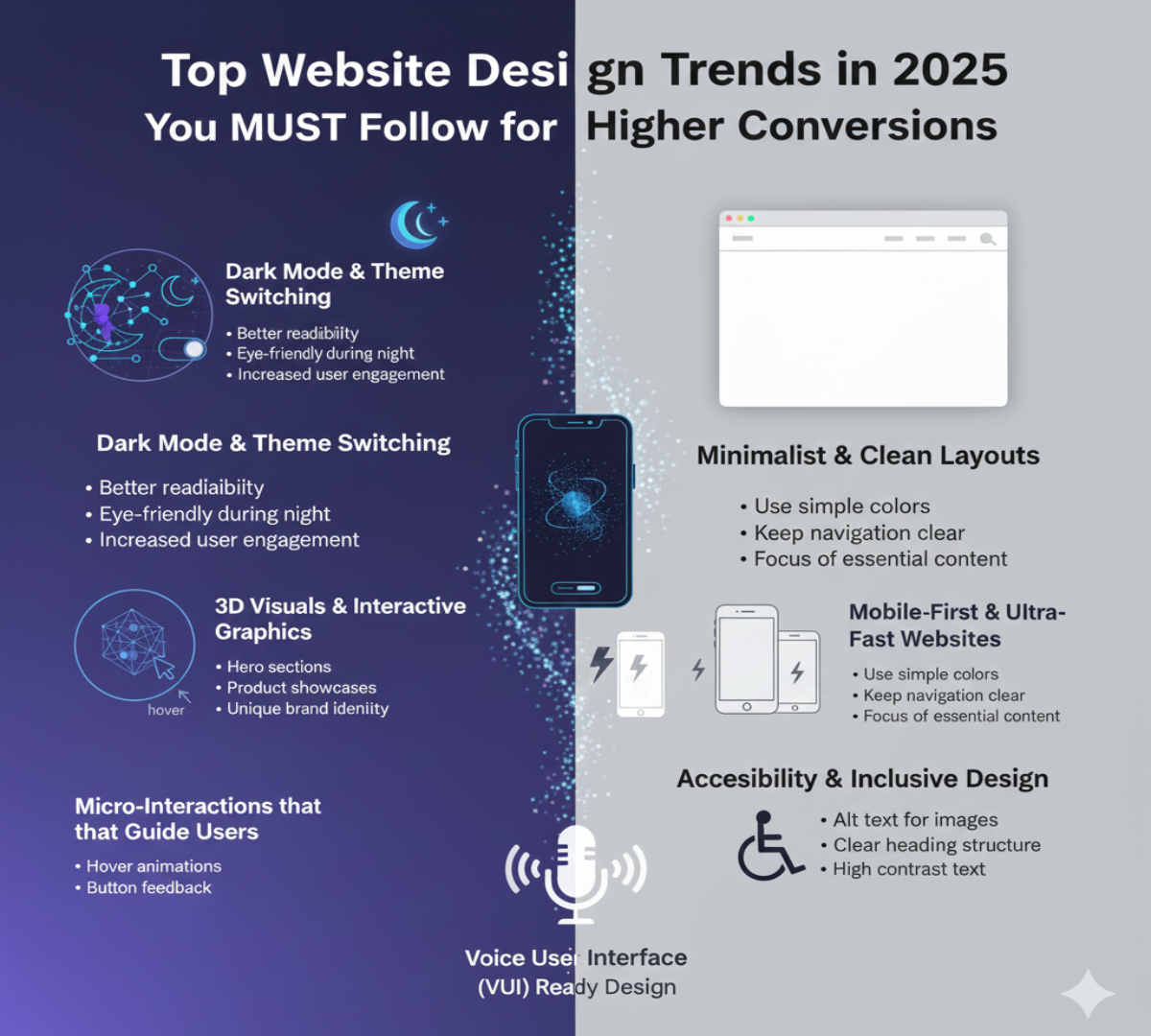
Website design is rapidly evolving in 2025. Having a visually attractive layout is no longer enough — businesses must adopt modern design trends that enhance user engagement, loading speed, accessibility, and conversions.
In this guide, we’ll explore the top website design trends every business website should follow to stay competitive and conversion-focused in 2025.
1. Dark Mode & Theme Switching
Dark mode is no longer limited to mobile apps; it has become a major website design trend in 2025. Dark backgrounds combined with high-contrast elements help users browse longer and reduce eye strain.
Adding a theme switcher allows users to toggle between light and dark modes, improving overall user experience.
Benefits:
- Better readability
- Eye-friendly for nighttime browsing
- Increased user engagement
2. Minimalist & Clean Layouts
Overloaded and cluttered designs are becoming outdated. Clean, minimalist layouts with proper spacing look more professional and help reduce bounce rates.
A clear structure allows users to find information quickly and keeps their focus on important content.
Design Tips:
- Use simple and consistent color schemes
- Keep navigation clear and intuitive
- Focus only on essential content
3. 3D Visuals & Interactive Graphics
3D visuals, subtle animations, and interactive graphics create an immersive and modern user experience. These elements make websites more engaging while strengthening brand identity.
However, it’s important to balance creativity with performance to avoid slow loading times.
Best Used For:
- Hero sections
- Product showcases
- Building a unique brand identity
4. Voice User Interface (VUI) Ready Design
Voice search and voice-based interactions are growing rapidly in 2025. Designing websites that support voice search improves accessibility and provides SEO advantages.
Optimizing content for conversational keywords helps businesses stay ahead in search engine rankings.
5. Micro-Interactions That Guide Users
Micro-interactions are small but powerful design elements such as hover effects, button animations, and click feedback. These interactions guide users through the website and make navigation more intuitive.
They also play a key role in improving conversion rates.
Examples:
- Hover animations
- Progress indicators
- Button click feedback
6. Mobile-First & Ultra-Fast Websites
Google follows mobile-first indexing, which makes responsive and fast-loading websites essential for higher rankings. A mobile-optimized website ensures better user experience and improved SEO performance.
Performance Checklist:
- Compressed images
- Lazy loading
- Caching plugins
- Minimal JavaScript usage
7. Accessibility & Inclusive Design
Accessibility is no longer optional — it’s a digital standard. Websites should be usable for everyone, including users who rely on screen readers or keyboard navigation.
Inclusive design improves usability and expands your audience reach.
Ways to Improve Accessibility:
- Add alt text to images
- Use a clear heading structure
- Maintain high contrast between text and background
Conclusion
Website design trends in 2025 go beyond aesthetics. They focus on improving user experience, performance, SEO, and conversions. By implementing these modern web design trends, businesses can create high-performing websites that attract, engage, and convert users effectively.
Following these trends will help take your digital presence to the next level.