
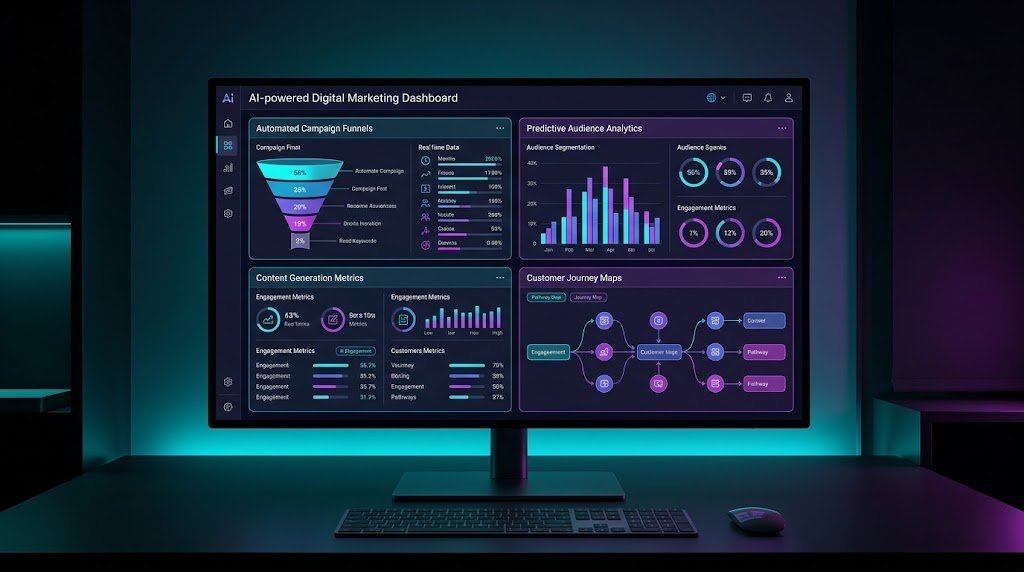
Following comprehensive ai marketing automation strategy tips is essential for digital marketers, growth strategists, agency leads, and e-commerce business owners looking to streamline repetitive marketing workflows, deliver hyper-personalized customer journeys, and boost ROI in 2026. As artificial intelligence transforms online customer acquisition, executing structured ai marketing automation strategy tips delivers a decisive competitive advantage.
From deploying predictive lead scoring models and automating dynamic email campaigns to generating personalized ad creatives and optimizing real-time search engine bidding, these ai marketing automation strategy tips provide actionable operational guidance. Here are the core tactics to master marketing automation today.
1. Strategic Integration of Generative AI in Content Workflows
Integrating generative AI models into your editorial calendars accelerates marketing asset creation while preserving strong brand consistency. Essential ai marketing automation strategy tips begin with training custom AI writing prompts and image tools on your brand tone guidelines to produce social copy, ad variations, and blog outlines quickly.
Combining AI speed with human editorial oversight ensures all published content remains authentic, accurate, and deeply engaging for target audiences.
2. Personalizing Customer Journeys with Predictive Analytics
Analyzing historical user interaction data enables AI tools to forecast future purchasing decisions and recommend relevant products automatically. Incorporating actionable ai marketing automation strategy tips allows marketing teams to set up automated product recommendation blocks based on real-time browsing behavior.
Adhering to modern frontend usability standards and web performance guidelines published on web.dev by Google guarantees fast script rendering, low interaction latency, and optimal mobile user retention across personalized landing pages.
3. Automating Paid Search and Social Ad Bidding
Leveraging platform machine learning algorithms optimizes ad spend allocation dynamically across high-performing audience segments. Implementing modern ai marketing automation strategy tips focuses on setting up automated campaign budget allocation (CBO), smart bidding strategies, and dynamic creative swaps on Meta and Google Ads.
Utilizing open-source web publishing standards and digital integration guidelines maintained on WordPress.org helps marketing teams embed tracking pixels and conversion server APIs securely across website funnels.
4. Enhancing Conversational Lead Qualification with AI Chatbots
Deploying intelligent conversational AI chatbots on high-traffic landing pages answers prospective customer questions 24/7 without human delay. Applying practical ai marketing automation strategy tips demonstrates how to train AI sales bots on company knowledge bases, capturing qualified lead contact information smoothly.
Instant inquiry resolution eliminates purchasing friction, lowering bounce rates and increasing sales pipeline conversions.
5. Optimizing Email Marketing Campaigns with Send-Time Personalization
Delivering promotional emails at the exact hour individual subscribers are most likely to open their inbox drives higher click-through rates (CTR). Effective marketing automation setups guide strategists through configuring AI send-time optimization, dynamic subject line testing, and automated re-engagement workflows.
Tailoring communication timing to individual subscriber habits increases open rates while reducing unsubscribe rates significantly.
6. Automating Social Media Content Distribution and Repurposing
Transforming long-form video podcasts or blog articles into short-form social reels and text posts saves hundreds of creative production hours. Following recommended content production practices in these ai marketing automation strategy tips details scheduling multi-channel posts automatically using AI management platforms.
Consistent, automated multi-platform publishing builds brand visibility without overwhelming internal marketing resources.
7. Applying AI-Driven Semantic Keyword Analysis for Organic Search
Utilizing machine learning models to analyze user search intent and content gap opportunities accelerates organic search visibility. Following recommended SEO tactics in these ai marketing automation strategy tips ensures strategists identify emerging search queries, structure semantic subheadings naturally, and optimize page content for search engines.
Data-driven semantic optimization elevates organic search rankings, driving steady, high-intent website traffic.
8. Enforcing Ethical AI Data Usage and Compliance Standards
Maintaining customer trust requires transparent data collection practices and strict compliance with global data privacy regulations (such as GDPR and CCPA). Responsible marketing teams audit automated marketing systems regularly to ensure secure data handling and unbiased customer interactions.
9. Measuring Automation ROI and Marketing Campaign Metrics
Tracking key automation performance indicators—such as Cost Per Lead (CPL), Customer Lifetime Value (LTV), and operational time saved—provides clear business growth metrics. Utilizing an effective ai marketing automation strategy tips framework ensures your business continuously optimizes its digital marketing operations.
Transform Your AI Marketing Strategy Today
At IgniteCrest Solutions, we offer specialized ai marketing automation strategy tips consulting, custom AI workflow setup, and digital growth services for enterprise brands. Contact our AI marketing experts today to scale your business operations.