
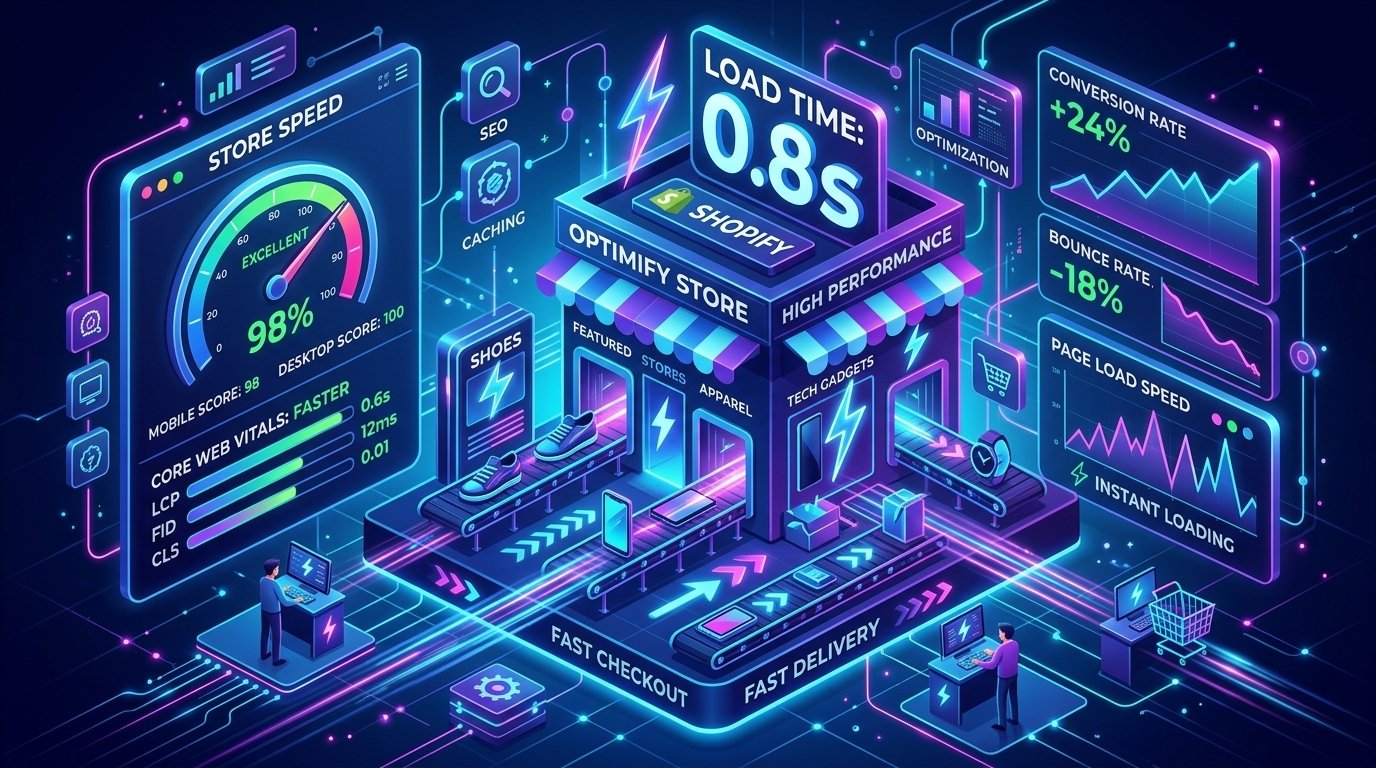
In the competitive e-commerce landscape, page loading speed directly impacts your conversion rate and overall revenue. Implementing effective Shopify Speed Optimization Strategies ensures your store loads instantly, keeps potential buyers engaged, and ranks higher on search engine results pages.
Modern shoppers expect online stores to load in under two seconds. A delay of even one second can lead to increased cart abandonment and lower search engine rankings. By applying technical performance enhancements, store owners can execute continuous Shopify Speed Optimization Strategies to deliver seamless shopping experiences across desktop and mobile devices.
Essential Shopify Speed Optimization Strategies for High Performance
Follow these 7 proven technical tactics to accelerate your Shopify store, optimize Core Web Vitals, and scale your organic sales effectively.
1. Compress and Convert Store Images to Next-Gen Formats
High-resolution hero banners and product images are often the primary cause of slow page loading times. Replacing heavy PNG or JPEG files with compressed WebP assets drastically reduces page weight without sacrificing visual clarity. Image compression stands as one of the most impactful Shopify Speed Optimization Strategies for immediate loading speed gains.
2. Audit and Remove Unnecessary Shopify Apps
Every app installed on your Shopify store injects custom JavaScript files and tracking snippets into your theme header. Even after uninstalling an app, leftover code fragments often remain active. Periodically auditing installed plugins and removing unused third-party scripts is a core step in executing proper Shopify Speed Optimization Strategies.
3. Upgrade to a Fast, Clean Shopify Theme
Not all Shopify themes are built with performance in mind. Feature-heavy themes loaded with complex animations and bloated code can slow down mobile rendering. Selecting a modern, lightweight theme engineered for speed provides a strong foundation for long-term store optimization.
If you want to explore complementary digital marketing frameworks, check out our guide on Digital Marketing and SEO Strategies to discover how technical speed and content optimization work together to drive conversions.
4. Minify CSS, JavaScript, and HTML Code
Minification removes unnecessary spaces, line breaks, and comments from your store source code. Smaller file sizes allow web browsers to parse and render site elements significantly faster. Streamlining your theme code remains a critical component of technical Shopify Speed Optimization Strategies.
5. Implement Lazy Loading for Below-the-Fold Media
Lazy loading delays the rendering of images and videos until the user scrolls down to them. By prioritizing critical above-the-fold content first, your initial server response time decreases, providing visitors with an immediate visual layout while secondary images load in the background.
6. Utilize Web Content Delivery Networks (CDNs)
Shopify provides robust built-in global CDN networks to serve static assets from servers closest to your visitors. Ensuring your media assets, fonts, and scripts are properly served via global CDN caching reduces latency and speeds up global loading times for international customers.
7. Monitor Core Web Vitals and PageSpeed Metrics
Regularly monitoring performance benchmarks allows you to identify technical bottlenecks before they impact sales. You can measure live loading speeds and mobile performance scores using Google PageSpeed Insights to evaluate your technical health alongside ongoing marketing efforts.
Why Site Performance Matters for Long-Term E-Commerce Scale
Store performance is not a one-time project, but a continuous operational priority. As you add new products, launch promotional campaigns, and install updated marketing tools, monitoring loading performance protects your conversion funnel. Prioritizing structured Shopify Speed Optimization Strategies delivers lower customer acquisition costs, higher organic search visibility, and consistent long-term business growth.
By optimizing media files, keeping your codebase clean, and leveraging fast theme structures, your Shopify store will deliver frictionless purchasing journeys and maximize customer retention.